
The Trauma Therapist's Guide to EFT: A Mind-Body Approach to Regulation, Trauma Processing, and Integration
Learn how to integrate Emotional Freedom Techniques (EFT) across the phases of trauma treatment, from regulation through trauma processing and integration, with Dr. Robert Schwarz.


Own It Now
Your purchase includes:
- Video Recordings
- Audio Downloads
- Full Transcripts
- Bonus Resources
Course Description
A five-session, 10-hour on-demand training led by Dr. Robert Schwarz exploring how Emotional Freedom Techniques (EFT) can be integrated across the phases of contemporary trauma treatment.
Watch a Preview of the Training
Get a first-hand look at the approach, teaching style, and format you can expect in our on-demand learning sessions.
What’s included in the training?
Five Two-Hour On-Demand Clinical Training Sessions with Dr. Robert Schwarz
Across five in-depth sessions, Robert guides you through a structured framework for integrating EFT into trauma treatment—from stabilization and regulation through trauma processing, belief change, attachment work, integration, and future-oriented growth.
Rather than teaching EFT as a standalone technique or scripted intervention, Robert focuses on the clinical judgment behind the method: what to target, how closely to follow the client’s experience, when to deepen the work, when to slow down, and how to recognize opportunities for meaningful change.
You’ll learn how EFT can complement many of the approaches trauma clinicians already use, including phase-oriented treatment, somatic therapies, attachment-focused work, ACT, Polyvagal-informed approaches, EMDR-informed concepts, and other integrative models.
Clinical Demonstrations, Experiential Exercises, and Practical Application
Throughout the course, you’ll observe Robert use EFT in real time and explain the reasoning behind his choices.
These demonstrations and clinical debriefs help you see how an intervention changes as the client’s experience changes—whether an emotion intensifies, a bodily sensation emerges, a memory surfaces, a belief becomes clearer, or a new resourceful state begins to appear.
By joining in with experiential practices, you’ll develop a clearer understanding of how to assess distress and identify component aspects of an experience. You’ll learn how to maintain the client’s window of tolerance, and follow the work without becoming rigidly attached to a protocol.
Special Attachment Session with Dr. Diane Poole Heller
In the fifth class, Robert is joined by internationally recognized attachment expert Dr. Diane Poole Heller for a special exploration of attachment wounds and relational patterns.
Together, they examine how attachment strategies can be understood as adaptive relational systems shaped by implicit beliefs, expectations, and rules about closeness, trust, dependency, abandonment, safety, and connection.
You’ll explore how EFT can be used to work with the experiences supporting these relational patterns while helping clients develop greater flexibility, agency, compassion, and security in their relationships.
Bonus Video Training: Using EFT for Societal Stress & Overwhelm
Clients—and clinicians—are living amid constant information, uncertainty, digital stimulation, social tension, and rapid change.
In this special bonus presentation, Robert explores how EFT can help people remain connected to internal resources even when circumstances around them remain unsettled.
You’ll learn how to work with information overload, hypervigilance, doom scrolling, and external stress while developing what Robert calls an internal anchor: the ability to remain engaged with difficult realities without becoming consumed by them.
Private Course Portal with Lifetime Access
Learn at your own pace through your private online learning portal, which includes video and audio recordings of every session, written transcripts, and additional learning resources, plus Diane’s Trauma Symptom Checklist, an easy-to-use resource designed to help identify emotional, relational, behavioral, and physiological patterns associated with unresolved trauma.
Return whenever you want to revisit a technique, review a demonstration, or refresh your understanding of a particular clinical application.
Why take this course?
Trauma clinicians already have many effective ways to help clients understand their histories, regulate distress, process difficult experiences, and develop healthier coping skills.
And yet clients can make substantial progress while still finding that trauma influences their bodies, beliefs, relationships, behaviors, and choices. A client may understand where a pattern began and still feel governed by it—symptoms may improve, while the person continues to avoid opportunities, relationships, or goals they genuinely want.
These moments can leave clinicians wondering where to focus next. Does the client need greater capacity for regulation? Is there unresolved traumatic material that needs attention? Or is the work now about helping them integrate their progress and begin living differently?
Robert’s approach offers a practical framework for making those decisions. Throughout this training, he presents Clinical EFT as a flexible mind-body method that can support three interconnected dimensions of trauma treatment: Regulation, helping clients stay connected to sufficiently resourceful internal states while engaging thoughts, sensations, emotions, memories, urges, and situations that previously overwhelmed them; Trauma Processing, breaking traumatic experiences into workable component parts so they can be engaged with greater precision, titration, and attention to the client’s window of tolerance; and Integration, recognizing and strengthening emerging experiences of resilience, competence, possibility, connection, and agency—and helping clients carry those gains into everyday life.
The aim is to expand your clinical options without asking you to abandon the therapies you already practice.
Who is this course for?
This training was designed primarily for therapists and helping professionals who want to understand how EFT can be used within contemporary trauma treatment. It may be especially valuable for:
What you’ll learn?
In this on-demand, experiential training, you’ll learn:
Ready to put this into practice?
Watch on demand, at your own pace, with lifetime access.
Here’s what to expect from each class session…
Session 1
Rethinking Trauma Healing: Regulation, Engagement, Integration, and EFT
The course begins by reconsidering the map of trauma healing itself. Robert explores regulation, engagement, memory integration, and reconsolidation as interconnected elements of therapeutic change and introduces EFT as a mind-body method for helping create the conditions in which that change can occur.
You’ll learn a foundational EFT process, explore the two therapeutic modes of EFT, and begin developing and strengthening resourceful internal states.
Session 2
EFT for Regulation in Phase 1 of Trauma Treatment
Before clients can safely engage difficult material, they need enough capacity to remain present with what arises. This session goes deeper into using EFT for emotional and physiological regulation. Robert shows you how to deconstruct a presenting problem into smaller component aspects, identify useful treatment targets, and follow the client’s experience with greater precision.
You’ll explore targets including emotions, thoughts, physical sensations, symptoms, addictive urges, and stress reactions, while learning how to maintain a stance of curious non-attachment. Robert also examines how to identify meaningful outcome goals, recognize blocks or resistance to those outcomes, and begin tracing present-day reactions toward experiences that may be contributing to them.
Session 3
Telling the Story: Processing Trauma and Changing Beliefs
How can you engage a traumatic memory without treating it as one overwhelming whole? In this session, Robert teaches one of EFT’s central trauma-processing methods: the Tell the Story Technique.
You’ll learn how to slow the process down, identify emotional crescendos, and work with specific elements of an experience including emotions, sensations, images, thoughts, sounds, meanings, and beliefs. Robert also introduces the “tabletops and table legs” framework for understanding how emotionally charged experiences can continue supporting limiting beliefs, schemas, and identity conclusions. You’ll explore SUDS ratings, the T.O.T.E. process, titration, precision attending, and continuous reassessment as tools for supporting deeper work while maintaining client safety and the window of tolerance.
Session 4
From Trauma Recovery to Living Fully: EFT for Integration, Agency, and Post-Traumatic Growth
What happens after the traumatic memory becomes less distressing? Robert turns the focus toward integration: recognizing when clients begin showing greater resilience, courage, flexibility, connection, possibility, and agency—and helping those experiences become increasingly stable parts of how they relate to themselves and their lives.
You’ll learn how Phase 3 integration can occur throughout treatment, how to recognize naturally emerging moments of post-traumatic growth, and how EFT can be used to strengthen resourceful states and connect them with identity. The emphasis moves toward future-oriented change: helping clients translate therapeutic gains into relationships, work, creativity, purpose, meaningful goals, and fuller participation in everyday life.
Session 5
The New Frontier: Using EFT to Address Attachment Wounds and Relational Patterns
With Dr. Robert Schwarz + Dr. Diane Poole Heller
In this special closing session, Robert and Diane combine their expertise in EFT, trauma, and attachment to explore how attachment strategies can be understood as adaptive relational systems. You’ll examine the beliefs, predictions, and implicit rules that may organize patterns around trust, closeness, dependency, abandonment, safety, and connection.
Using EFT, Robert and Diane explore how clinicians can help clients appreciate the protective purpose of these strategies while gradually working with the experiences and beliefs that keep old relational patterns in place. Robert describes part of this process as a kind of “physical therapy for attachment”—repeatedly strengthening new experiences, expectations, and relational capacities so that greater flexibility and security can become possible.
Start with the first session today.
Watch on demand, at your own pace, with lifetime access.
Meet the Experts
Meet the Expert

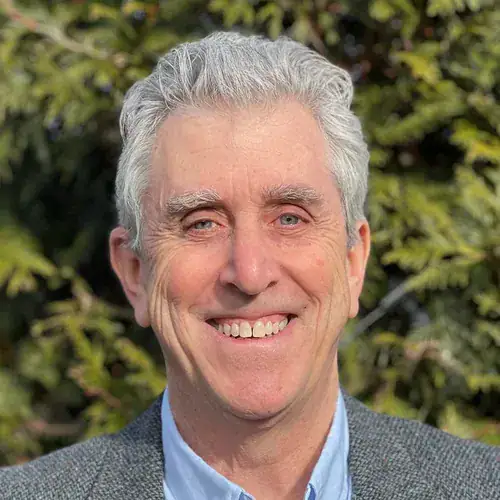
Dr. Robert Schwarz
Dr. Robert Schwarz, PsyD, ACAP-EFT is a licensed psychologist, educator, author, and longtime leader in the field of energy psychology. Across more than four decades of clinical work, he has focused on trauma treatment, integrative psychotherapy, brief therapy, hypnosis, and Emotional Freedom Techniques.
He served as Executive Director of the Association for Comprehensive Energy Psychology from 2008 to 2024 and developed its online EFT training program. Robert is the author of three books, including Tools for Transforming Trauma, and has spent decades teaching therapists to bring greater precision, flexibility, and experiential depth into trauma treatment. He treats EFT as a clinical tool whose effectiveness depends on knowing how and when to use it.

Dr. Diane Poole Heller
Diane Poole Heller PhD is an internationally recognized speaker, author, and teaching expert in adult attachment theory and trauma resolution. She created the Dynamic Attachment Repatterning Experience™ (DARe), an approach that gives therapists and individuals practical skills for healing attachment and trauma wounds.
Her work helps adults with childhood attachment injuries develop Secure Attachment Skills (SAS) that lead to more connected and fulfilling relationships. Her expertise in trauma healing has supported survivors, helpers, and families affected by events such as 9/11, Columbine, and other school shootings.
She has authored several books, including The Power of Attachment: How to Create Deep and Lasting Intimate Relationships and The Attachment Workbook.
Learn directly from these experts.
Learn directly from this expert.
Watch on demand, at your own pace, with lifetime access.
Frequently Asked Questions
Find answers to common questions about course access, the training format, continuing education, and purchasing. If you need more information before enrolling, our support team is always happy to help you choose the right training.
Do I need previous experience with EFT to benefit from this training?
No.
The course begins with Robert’s foundational framework and the basic EFT process before progressively moving into regulation, trauma processing, belief work, integration, and attachment applications. If you are completely new to EFT, you’ll learn the core principles and process. If you already use EFT, the course offers a deep exploration of targeting, assessment, pacing, clinical decision-making, and integration with trauma treatment. Robert teaches both the intervention itself and the clinical reasoning that informs when, why, and how it may be used.
Is EFT being presented as a replacement for other trauma approaches?
No.
EFT is presented as a flexible mind-body method that can complement the therapeutic frameworks and clinical judgment you already use. Throughout the program, Robert draws connections with phase-oriented trauma treatment, somatic approaches, ACT, attachment-focused work, Polyvagal-informed approaches, EMDR-informed concepts, resource-oriented psychotherapy, and other integrative trauma therapies.
Are the class sessions live or recorded?
This is now a fully on-demand training. Your course portal includes the session recordings along with downloadable audio, slides, resources, demonstrations, and the included bonus training. You can work through the course at your own pace and return to individual sessions whenever you wish.
Are CE credits available for this course?
Continuing Education (CE) credits are not available for this training at this time.
Is there a refund policy?
We’re confident this program will be a valuable investment in your education, personal growth and clinical practice.
Because this is a re-issue of a previous training and course materials are downloadable, all sales are final.
If you have further questions, do not hesitate to reach out to our Customer Support Team for help.
I’m having trouble completing the purchase. How can I get support?
If you have additional questions or need technical support, please contact our friendly Customer Support Team for help.
Ready to begin?
Learn at your pace, with lifetime access to the course materials.
What Our Students Say About This Training
Join the others who have taken this course.
Watch on demand, at your own pace, with lifetime access.

Get immediate access…
Own It Now For Just
Deepen Your Learning With These Trainings


