

NEW!
On-demand training

Healing Trauma Through an Integrative Lens: Five Essential Pathways for Clinicians

Learn to recognize how different forms of trauma shape the nervous system, and choose interventions that support healing with greater precision, flexibility, and confidence.

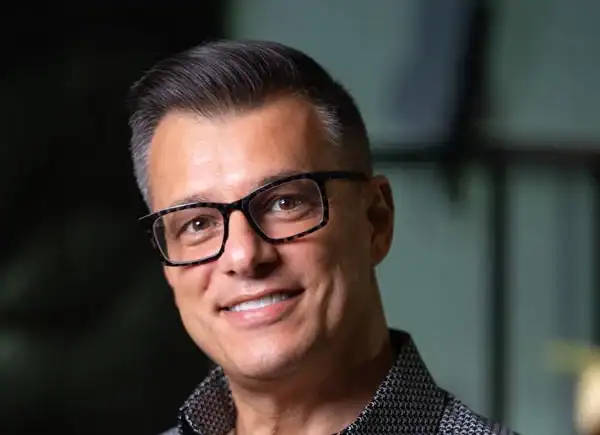
Trauma Solutions: A man with short gray hair, wearing black-rimmed glasses and a patterned shirt, smiles at the camera with a blurred background.
Dr. Frank Anderson
5 Recorded Sessions
Learn At Your Pace
Lifetime Access
Includes Q&A
Therapist in a pink blazer sitting in a blue armchair, gesturing as she talks with a client during a therapy session

Own It Now

$347
Secure checkout

Your purchase includes:

Video Recordings
Slide Handouts
Demonstrations
Bonus Resources

Course Description

A five-session clinical training with Dr. Frank Anderson exploring five essential trauma pathways: shock, relational, attachment and preverbal, identity-based, and collective trauma. Through in-depth teaching, clinical examples, guided interventions, and recorded Q&A, learn to integrate neuroscience, parts-informed psychotherapy, polyvagal principles, and relational theory into a flexible approach to trauma treatment.

Watch a Preview of the Training

Get a first-hand look at the approach, teaching style, and format you can expect in our on-demand learning sessions.

What’s included in the training?
Here is everything you get for just
$347!
Five Two-Hour On-Demand Training Sessions with Dr. Frank Anderson

Across five in-depth sessions, Frank guides you through five essential trauma pathways: shock trauma and PTSD, relational trauma, attachment and preverbal wounds, identity-based trauma, and collective trauma.

Each session combines core teaching, clinical examples, and recorded Q&A, with practical guidance on what to prioritize, how to pace, and how to recognize and respond to overwhelm.

Clinical Demonstrations and Step-by-Step Debriefs

Watch how Frank’s integrative framework comes together in real clinical moments.

He pauses throughout to explain what he’s tracking, why he’s choosing a particular intervention, and how he adjusts pacing as the nervous system shifts.

Each debrief breaks the work into practical steps you can adapt to your own clients, across every trauma pathway covered in the course.

Bonus Resources: Parts Work Video Training and Reference Guides

Deepen your understanding of parts work with a bonus video training, Introduction to Parts Work, plus three clinician-friendly reference guides.

Understanding Parts Work helps you orient clients to how parts operate and why protectors show up the way they do. The Working with Parts Glossary keeps key terms clear and easy to explain. The Parts Work & Attachment Reference Guide connects attachment patterns with protective strategies, so you can track what’s happening relationally and internally at the same time.

Private Course Portal with Lifetime Access

Learn at your own pace through your private online learning portal, with lifetime access to recordings of all five training sessions, slide handouts, and bonus resources.

Return to individual sessions whenever you want to revisit a trauma pathway, review a clinical demonstration, or refresh a particular approach to pacing and protection.

Why take this course?

A client’s trauma is rarely “one thing.”

Clients can gain real insight, naming the event, tracking the pattern, and explaining what activates them, and still find something inside them clamping down. The same cycles keep returning: shutdown, hypervigilance, numbing, collapse, people-pleasing, avoidance, or rage.

Not because they’re unwilling, but because their system is protecting them.

Trauma isn’t only a memory. It’s an organizing principle that shapes the nervous system’s threat response, a client’s internal protective strategies, and the way connection is experienced or avoided. And different kinds of trauma organize the system in different ways.

When every presentation receives the same approach, the work can create friction. We may push for processing when the system needs stabilization, chase insight when the client needs regulation, focus on technique when the real issue is pacing, or try to repair relationship before the nervous system can tolerate closeness.

Frank’s integrative framework offers a clinician-first approach to discernment, built around three questions you’ll return to throughout the training:

  • Which Pathway Is Most Active: Recognizing whether shock, relational, attachment and preverbal, identity-based, or collective trauma is driving the presentation, even when symptoms overlap.
  • What the System Needs Next: Matching interventions to the client’s nervous system state, protective strategies, and relational context, and knowing when stabilization needs to come before deeper work.
  • How to Pace the Work: Recognizing overwhelm early, titrating carefully, and working with protectors in ways that move treatment forward without retraumatization.

The aim isn’t to replace the approaches you already use. It’s to expand your options and sharpen your clinical judgment, so you can work with greater precision with the client in front of you.

Who is this course for?

This training is designed for clinicians and healing professionals who want a clearer, more flexible way to work with trauma across different presentations, whether you’re newer to trauma work or looking to expand your clinical range.

It may be especially valuable for:

Therapists, counselors, and mental health professionals who want a flexible framework for assessing which kind of trauma is most active and choosing interventions that support regulation, protection, and integration over time.
Psychologists and psychiatrists seeking greater clinical range with PTSD, complex trauma, dissociation, attachment trauma, and relational injuries, including how to match pacing to a client’s nervous system capacity.
Social workers and trauma-informed coaches supporting clients who feel stuck in repeating cycles of shutdown, hypervigilance, avoidance, collapse, people-pleasing, or emotional flooding.
Somatic practitioners, bodyworkers, and yoga therapists interested in how parts-informed and attachment-aware strategies can complement body-based work, especially with shame, dissociation, or persistent dysregulation.
Professionals working with marginalized communities who want clinically useful ways to address identity-based trauma and chronic “othering” without pathologizing lived experience.
Educators, advocates, and caregivers in trauma-exposed settings who want to understand how collective stress shapes regulation, behavior, and connection, and how to cultivate resilience and resource.

No previous training in parts work, polyvagal theory, or neuroscience is required.

What you’ll learn?

In this on-demand training, you’ll learn:

How to identify which trauma pathway is most active in a client’s presentation: shock, relational, attachment and preverbal, identity-based, or collective.
How neuroscience, parts-informed psychotherapy, polyvagal principles, and relational theory come together in one coherent clinical approach.
How to differentiate acute trauma from chronic or complex PTSD, and when stabilization needs to come before deeper processing.
How to recognize early signs of flooding, shutdown, and escalation, and adjust pacing to prevent retraumatization.
Why protective strategies are best understood as intelligence rather than obstacles, and how to work with them safely.
How relational trauma shapes attachment patterns and internal working models, and how to support repair without pushing past protection.
How early developmental trauma is encoded before language, and how to work with implicit material without requiring explicit memory.
How marginalization and systemic stress shape threat detection, self-perception, and internal burdens, and how to offer affirming, culturally attuned care.
How to distinguish collective trauma from individual trauma, recognize intergenerational patterns, and support clients living with ongoing uncertainty.
How to build internal safety, agency, and secure attachment capacities that support lasting integration.

Ready to put this into practice?

Instant access for just
$347.

Watch on demand, at your own pace, with lifetime access.

Here’s what to expect from each class session…

Session 1

The Shock and the Echo: Working with Acute and Chronic PTSD

Trauma can emerge from a single overwhelming moment, or accumulate across repeated, inescapable experiences.

In this opening session, Frank explores how threat is encoded in the brain and body, how protective strategies organize around survival, and why symptoms can persist long after danger has passed.

You’ll learn how to differentiate acute trauma from chronic or complex PTSD, and how to recognize when a client is ready for deeper work and when the most therapeutic move is stabilizing the system first.

Frank also walks through common clinical sticking points, including flooding, shutdown, “stuck processing,” and reenactment cycles, and shows how to build internal trust, reduce reactivity, and support agency without pushing the nervous system past capacity.

    Session 2

    The Wound Within the Relationship: Healing Relational Trauma

    Relational trauma is encoded not only in memory, but in attachment templates, nervous system expectation, and internal beliefs about safety and worth.

    This session focuses on how interpersonal trauma shapes protective strategies, emotional regulation, and adult relating.

    Frank helps you track the moment-to-moment dynamics that often define relational trauma work: pursue and withdraw patterns, fawning, collapse, control, mistrust, testing, and sudden disconnection.

    You’ll learn to work with these strategies as protective intelligence, and to use polyvagal-informed and parts-informed approaches that build enough internal safety for clients to tolerate closeness, boundaries, and repair without reenacting the original wound.

      Session 3

      Before There Were Words: Attachment Trauma and Preverbal Wounds

      Preverbal trauma shapes the nervous system before language and explicit memory are available.

      These early wounds often show up later as somatic symptoms, shame, dysregulation, or chronic relational struggle.

      In this session, Frank explores how early trauma is encoded in the nervous system and attachment circuitry, and how to recognize presentations that suggest early attachment wounding, even when the story is unclear.

      You’ll learn somatic and parts-informed ways of working with these implicit layers, with an emphasis on pacing, internal safety, and gradually building secure attachment capacities so the work stays tolerable and oriented toward integration.

        Session 4

        Trauma of Identity: Healing Wounds Related to Marginalization, Race, Gender, Orientation and Neurodiversity

        Identity-related trauma is often chronic, systemic, and reinforced through repeated experiences of “othering.”

        In this session, Frank examines the clinical and neurobiological impacts of marginalization, and how to approach identity-based trauma without pathologizing lived experience.

        You’ll explore how ongoing systemic stress shapes threat detection, internalized beliefs, protective strategies, and relational expectations.

        Frank also addresses how clinicians can support empowerment and safety without collapsing into fixing, minimizing, or over-intellectualizing, and how to differentiate internalized burdens from a person’s core sense of self.

          Session 5

          When the Wound Is Shared: Understanding and Treating Collective Trauma

          Collective trauma affects communities, cultures, and generations.

          In this final session, Frank explores how large-scale events imprint on individuals and systems, and how to support clients living with ongoing societal stressors.

          He addresses a core clinical challenge: when the stressor isn’t over, the nervous system can’t simply resolve it like a past event.

          You’ll learn how to support regulation and meaning-making amid sustained uncertainty, strengthen internal and external resources, and recognize the intergenerational echoes of trauma that can shape identity, worldview, attachment, and self-protective strategies.

            Start with the first session today.

            Instant access for just
            $347.

            Watch on demand, at your own pace, with lifetime access.

            Meet the Experts

            Meet the Expert

            Trauma Solutions: A man with short gray hair, wearing black-rimmed glasses and a patterned shirt, smiles at the camera with a blurred background.

            Dr. Frank Anderson

            Psychiatrist and Author of Transcending Trauma

            True healing begins when we stop fighting our pain and start listening to the parts of us that carry it.

            Dr. Frank Anderson MD is a world-renowned trauma expert, Harvard-trained psychiatrist, and global speaker. He is co-author of the IFS Skills Training Manual, author of the bestselling Transcending Trauma, and author of the memoir To Be Loved: A Story of Truth, Trauma and Transformation.

            Dr. Anderson has a long affiliation with Bessel van der Kolk, is on the board of the Trauma Research Foundation, and is a former Lead Trainer with the IFS Institute. He is passionate about integrating current neuroscience with cutting-edge models of therapy, and is the director and cofounder of the Trauma Institute and Trauma-Informed Media.

            Learn directly from these experts.

            Learn directly from this expert.

            Instant access for just
            $347.

            Watch on demand, at your own pace, with lifetime access.

            Frequently Asked Questions

            Find answers to common questions about course access, the training format, continuing education, and purchasing. If you need more information before enrolling, our support team is always happy to help you choose the right training.

            Do I need prior experience with parts work, polyvagal theory, or neuroscience?

            No. Frank teaches an integrative model that works whether you’re newer to trauma work or already experienced.

            If you’re newer, the course gives you structure and a clear map. If you’re experienced, it gives you greater range, especially for complex cases where a single model stops working.

            How is this course different from other trauma trainings?

            Many trauma trainings either go deep on one approach or offer a long list of tools without helping you decide when to use what.

            This course focuses on clinical discernment: identifying which trauma pathway is most active and choosing interventions that match the client’s nervous system, protective strategies, and context.

            The goal isn’t to replace what you already do, but to expand your options and sharpen your judgment.

            Are the class sessions live or recorded?

            This is now a fully on-demand training.

            You’ll receive access to recordings of all five sessions, including Frank’s teaching, clinical demonstrations, and recorded Q&A.

            You can work through the course at your own pace and revisit individual sessions whenever you wish.

            Are CE credits available for this course?

            CE credits were available only to professionals who attended the live sessions. The on-demand version of this course does not include CE credits.

            Are CE credits available for this course?

            Continuing Education (CE) credits are not available for this training at this time.

            Is there a refund policy?

            We’re confident this program will be a valuable investment in your education, personal growth and clinical practice.

            Because course materials are downloadable, all sales are final.

            If you have further questions, do not hesitate to reach out to our Customer Support Team for help.

            I’m having trouble completing the purchase. How can I get support?

            If you have additional questions or need technical support, please contact our friendly Customer Support Team for help.

            Ready to begin?

            Get immediate access for
            $347.

            Learn at your pace, with lifetime access to the course materials.

            What Our Students Say About This Training

            Join the others who have taken this course.

            Instant access for just
            $347.

            Watch on demand, at your own pace, with lifetime access.

            Flag: hides this tab when testimonials are off or empty
            Dr. Frank Anderson, smiling, wearing glasses and a patterned button-up shirt
            Dr. Frank Anderson

            Get immediate access…

            Five two-hour on-demand sessions with Dr. Frank Anderson
            Clinical demonstrations and step-by-step debriefs
            Recorded Q&A with Dr. Frank Anderson
            Lifetime access to session recordings and slide handouts
            PLUS, Bonus Parts Work video and three reference guides

            Own It Now For Just

            $347

            Deepen Your Learning With These Trainings

            Trauma Solutions: Two teal downward-pointing chevrons inside a white circle on a light gray background.